
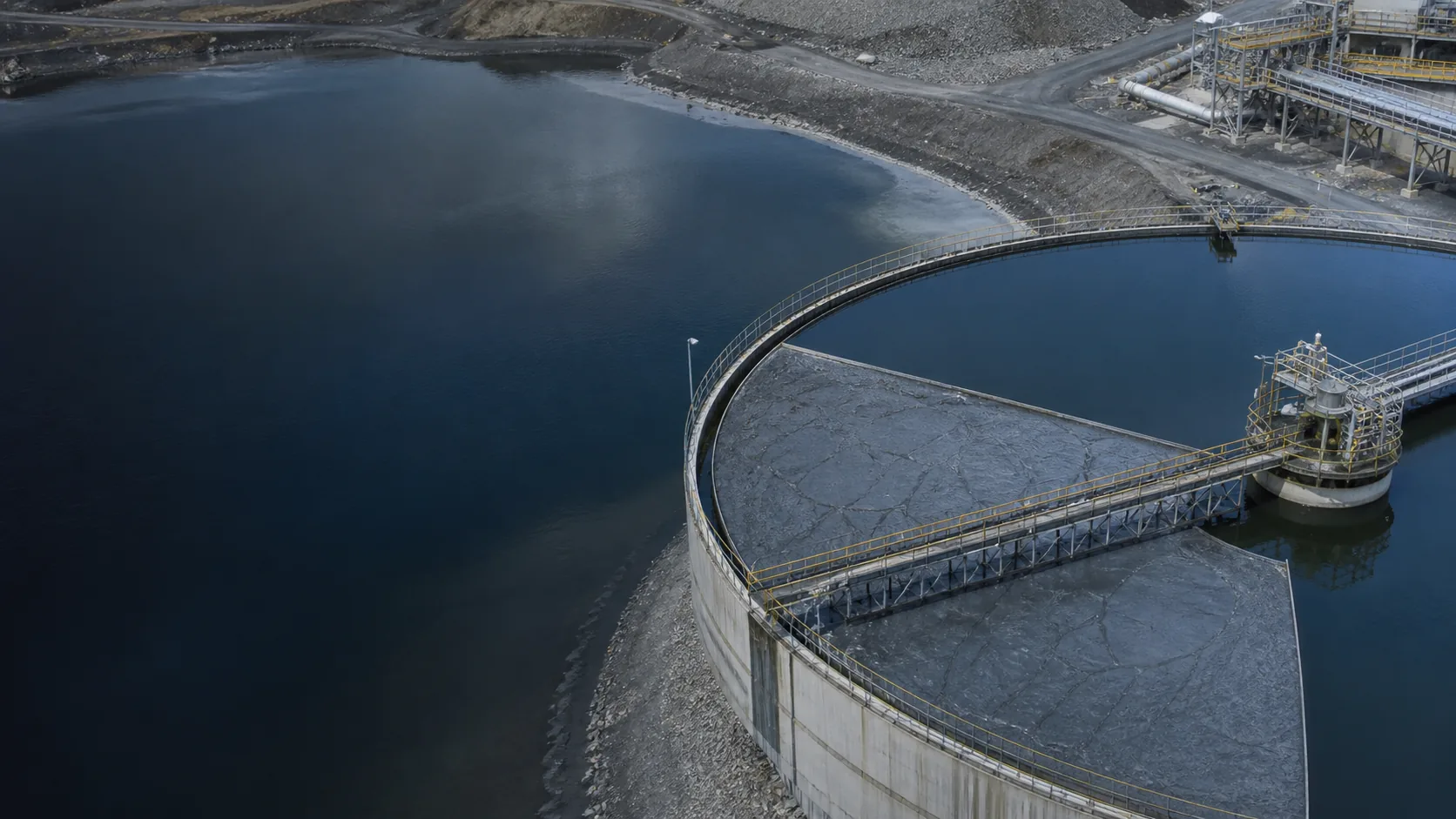
Specify the tailings duty before the grade
Iron ore tailings differ in mineral composition, fines and residual chemistry. Identify the stream and whether the objective is overflow recovery, thickener capacity or downstream dewatering. Describe normal and difficult conditions that the candidate must cover, including changes between production campaigns.
Anionic PAM is a useful starting family in many mineral separations, not a fixed specification for every circuit. Request coded samples and a defined plan. Supply current reagent and water information so the supplier can distinguish a fresh-water test from the real recycled-water environment.
Keep the settling comparison representative
Use freshly collected tailings where practical and record sample handling. Compare a dose curve with consistent dilution, mixing and observation points. Measure overflow after a fixed interval rather than judging clarity immediately after the largest visible floc appears.
Record bed behaviour and settled volume alongside interface movement. A cylinder cannot reproduce a continuous thickener, but it can eliminate unsuitable candidates. The tailings guide provides context; add the actual feed, product code and target to the purchasing record.
Confirm downstream handling at plant scale
Review feedwell contact, bed conditions, withdrawal and underflow pumping during the trial. Observe changes affecting the downstream filter or solids transport. Better overflow alone may not justify a candidate if its underflow becomes difficult to manage or the circuit loses capacity.
Record process and machine adjustments with each candidate. If clarity improves after feed stabilisation or withdrawal correction, repeat the reference before crediting the polymer. Normalise consumption to the declared solids or water basis so changing throughput does not distort the supplier comparison.
Discuss a purposeful grade range
Send mineral information, solids, pH, recycled-water conditions and baseline results to Gongyi Xinqi Polymer. Ask which codes are intended for the conditions and obtain their preparation instructions. Molecular profile and charge organise candidates; performance establishes their practical value.
The anionic product reference adds family context. Identify the plant contact responsible for technical acceptance in the RFQ brief. Keep untested offers separate from candidates the operating team has approved.
Approve material and delivery together
Retain the trial record and selected code before ordering. Confirm packaging, forecast requirement, destination and receiving documents. Review any code change after testing even when the proposed nominal specification appears similar. The actual preparation behaviour may have changed.
Plan replenishment from usable stock and measured consumption. Use the quality and packaging checks to preserve traceability. Reproducible water recovery and manageable solids under the agreed feed range provide a better purchase basis than an unqualified promise of maximum settling speed.
Review fast settling with difficult underflow
Suppose the quickest candidate gives clear overflow but causes difficulty pumping the underflow. Record solids concentration and the handling observation at comparable process conditions. Check the equipment before judging the chemistry, then include any persistent downstream problem in the acceptance decision. Faster settling cannot by itself establish the best grade for the full tailings circuit.
Compare finalists using the same agreed balance of overflow and underflow requirements. Report the consumption needed to meet that balance rather than the minimum dose that creates visible floc. The resulting grade and operating record can then support bulk supply, while a different ore condition or withdrawal arrangement triggers another technical review.
| Review point | Evidence to retain |
|---|---|
| Tailings | Mineral and fine-particle feed identified |
| Overflow | Quality assessed at a fixed interval |
| Underflow | Density and practical transfer reviewed |