
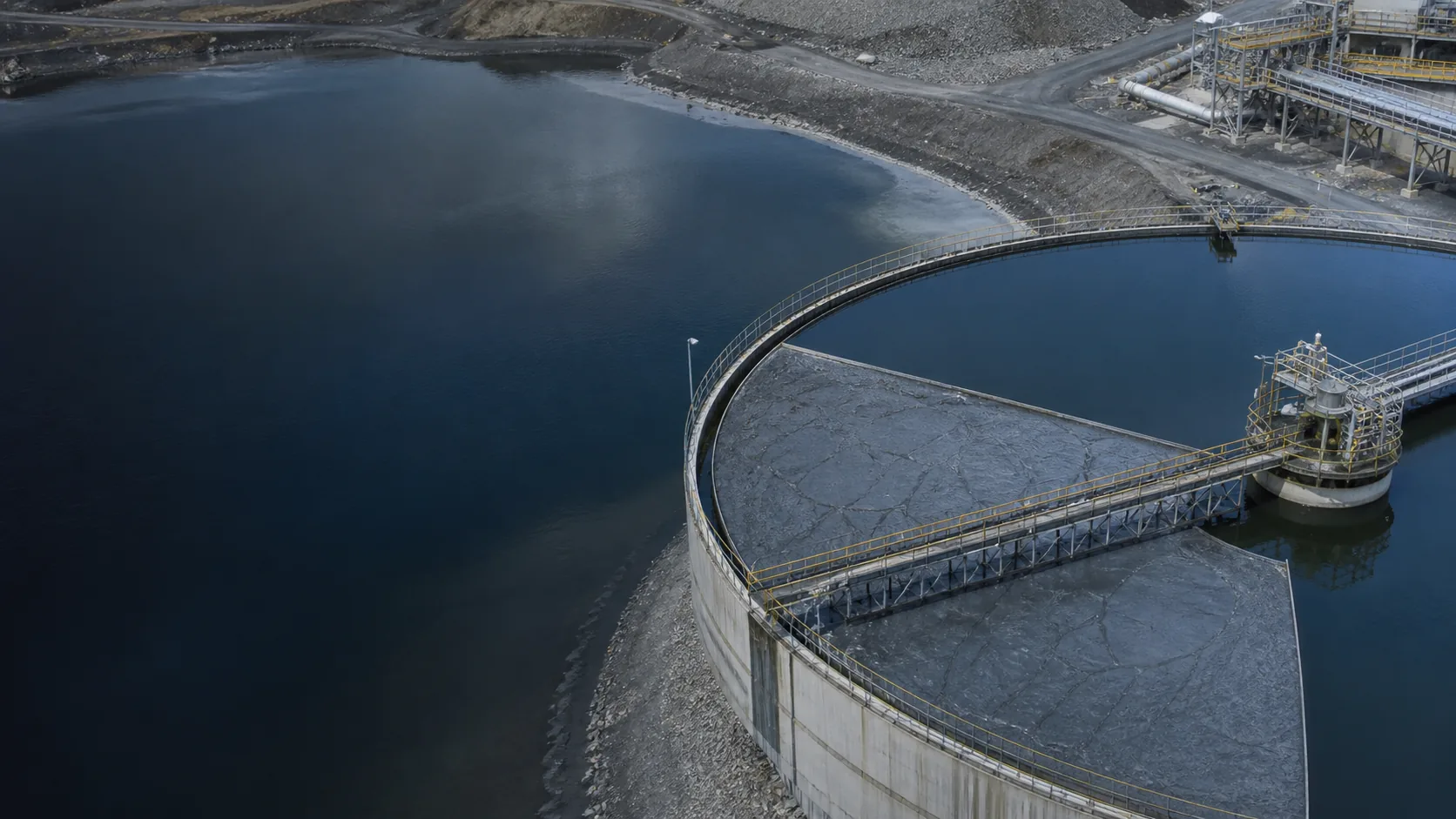
Describe fines as well as saleable sand
Silica sand washing creates a treatment requirement from fines and associated clay, not simply from the name of the saleable sand. State the washing stage, flow, suspended-solids range and available fine-fraction information. A change of excavation area can alter polymer response while the marketed sand remains similar.
Name the equipment and recycle-water requirement when requesting anionic polyacrylamide flocculant. Explain whether denser sludge or better filter cycles are also needed. The product family narrows the starting set; actual fines and circuit conditions determine the accepted grade.
Use the water that the circuit recycles
Collect representative wash water and note coagulants or other additives. Include recycled water in preparation or testing according to the actual procedure. A clean-water comparison can conceal interactions with accumulated salts or process contaminants. Report those differences rather than correcting the laboratory sample without explanation.
Run an untreated reference and controlled dose steps. Record clarity after an agreed settling period and inspect the bed. The sand-washing treatment guide explains the operating context; add the specific candidate, acceptance target and trial quantity to the buying brief.
Follow the sludge after clarification
Observe conditioned solids during withdrawal and filtration where present. A candidate improving clarity may also affect pumping, cloth performance or moisture. Include downstream results so the comparison does not move a problem from water recovery to solids handling.
When overflow becomes cloudy, check feed rate, sludge removal and preparation before assigning the change to polymer quality. Hydraulic and maintenance limitations need their own corrections. Record those corrections with chemistry changes to keep the purchasing conclusion supported by the actual operating evidence.
Ask for a small, purposeful sample set
Provide fines, feed variability, current treatment and results to Xinqi Polymer technical sales. Request coded candidates and preparation instructions. Ask what distinction each sample tests instead of requesting every catalogue grade. This keeps the laboratory work interpretable.
The anionic PAM reference and local anionic product route organise that discussion. A higher nominal molecular weight should not automatically outrank verified clarity, compaction and controllable consumption.
Turn acceptance into a supply plan
Measure consumption across representative runs and record operating days, packaging and destination. Confirm that the trial and commercial codes correspond. Compare delivered scope before judging quoted price per kilogram, and retain the basis of any activity conversion used.
Use the procurement checklist and preserve the trial method for later deliveries. Recheck the baseline after a major change in sand or clay source. A clear method lets the plant distinguish a new grade requirement from preparation faults or a correction needed in the solids-handling circuit.
Use a clay-rich feed in the purchase review
Suppose the supplier candidate is tested on clean-looking wash water but the plant’s difficult days contain substantially more clay. Include that challenging material before accepting a routine grade. Record where the sample came from and compare the candidates at a declared solids basis, keeping dilution and mixing consistent.
If the accepted code is intended only for the normal feed, document the limitation and how operations will respond to the difficult condition. Avoid presenting the normal-case consumption as an unconditional forecast. A purchasing plan supported by both water recovery and sludge handling gives the supplier clearer information for sample selection and subsequent replenishment.
| Review point | Evidence to retain |
|---|---|
| Feed | Normal and clay-rich fines included |
| Recovery | Recycle-water requirement stated |
| Sludge | Withdrawal and filtration checked |