
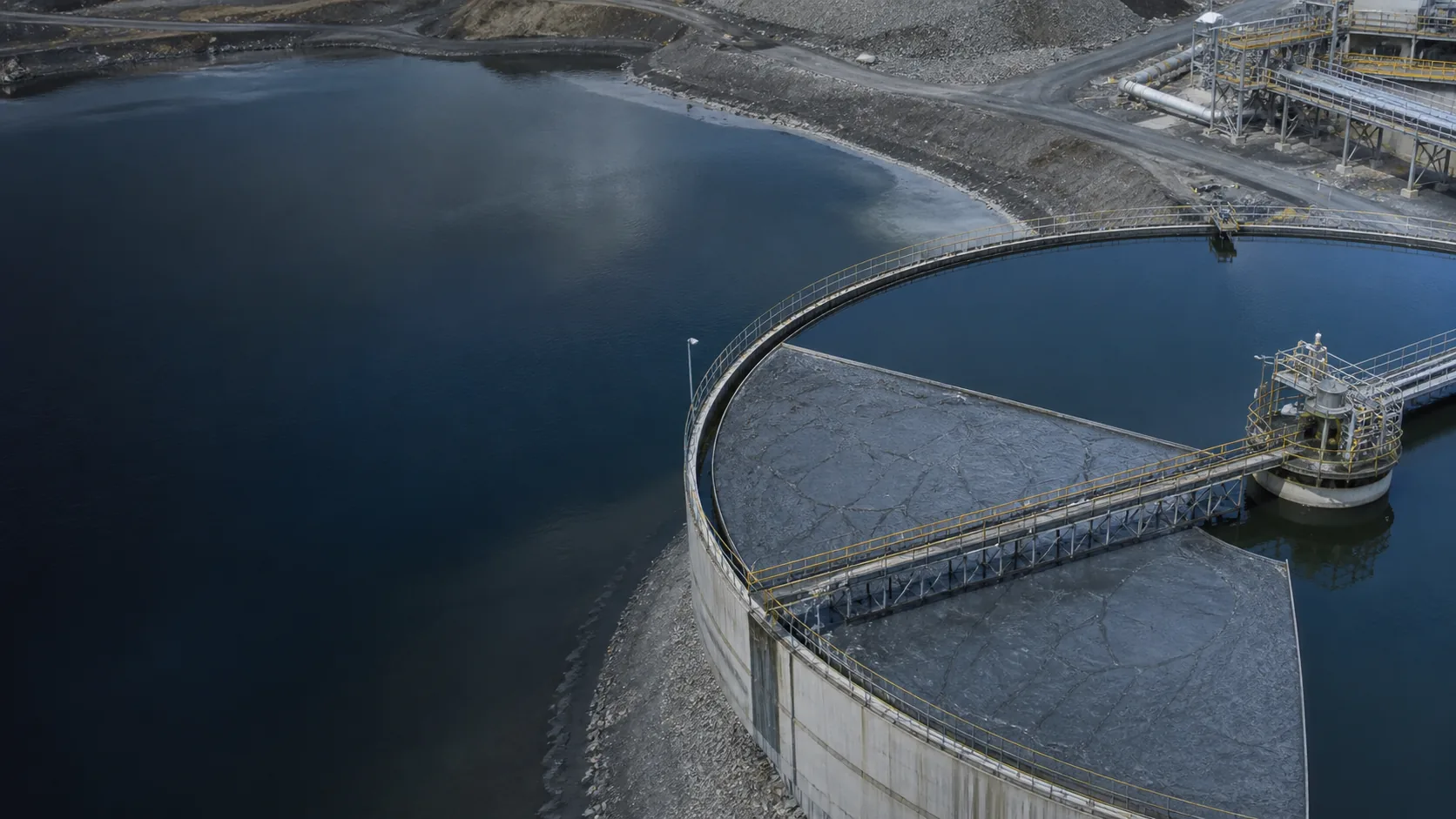
Polyacrylamide flocculant for sand washing wastewater is used to aggregate clay, silt and ultrafine mineral particles so water can be clarified and recycled. Anionic PAM is frequently screened first, although mineral composition, feed solids and coagulant use can change the preferred charge and dose.
Identify where the polymer is added
A settling pond, lamella clarifier, thickener and filter-press feed tank impose different requirements. Clarification needs rapid formation of settleable floc and clear overflow. Thickening also needs compact sludge with acceptable underflow rheology. Filter-press conditioning requires permeable floc that releases water without blinding the cloth.
The broader polyacrylamide application matrix shows how the same product family is evaluated for different separation stages.
Fine clay controls demand
Two sand plants can produce very different wastewater. Kaolin, bentonite, silica fines and weathered rock have different surface behavior. Feed concentration also changes during rainfall, excavation changes or crusher adjustments. Record turbidity or suspended solids, pH and conductivity when collecting trial samples. Recycled water should be used for polymer preparation during tests if that is normal plant practice.
Optimize flocculation, not just settling speed
Very large floc can settle quickly but trap excessive water or break at transfer points. Overdose may leave slimy sludge and residual polymer in the overflow. Underdose leaves persistent fines. Compare several doses and observe clarification, floc strength, sludge volume and subsequent dewatering.
Check the make-down system
Poor wetting creates fisheyes and wastes dry polymer. Add powder gradually into moving water, allow complete hydration and avoid high-shear pumps after aging. Confirm the stock concentration by mass and flow rather than relying only on equipment settings. Move the injection point if polymer contacts turbulent pumps before it reaches the solids.
Data to send with a quotation
- Sand or aggregate source and dominant clay type
- Water flow and suspended-solids range
- Clarifier, pond, thickener or filter-press arrangement
- Current coagulant and polymer dose
- Required overflow clarity and sludge handling route
Review the anionic PAM selection page and test candidates using the same slurry. An experienced water treatment polymer supplier can narrow the sample range when these process details are available. Additional application context is available from the anionic polyacrylamide product resource.
Separate chemical and mechanical limitations
If overflow suddenly becomes cloudy, check feed solids, short-circuiting, sludge withdrawal and polymer make-down before raising the dose. A clarifier that is hydraulically overloaded cannot be corrected indefinitely with more PAM. Likewise, poor filter-press cycles may come from cloth condition or insufficient feed pressure rather than flocculant selection.
For seasonal operations, repeat the dose curve when the excavation zone or recycled-water inventory changes. Keep a simple log of turbidity, polymer dose, sludge volume and press-cycle time so changes can be tied to feed conditions.
Convert the trial into operating controls
After selecting a grade, define a starting dose and adjustment range for low and high feed solids. Operators should respond to measured overflow turbidity and sludge behavior rather than colour alone. Calibrate the polymer pump, mark the stock concentration and confirm that the aging tank provides sufficient residence time at peak flow.
Commercial evaluation should include polymer consumption per cubic metre, clarified-water reuse, sludge transport and filter-press cycle time. Request a retained production sample, COA and moisture-resistant packaging. This provides a clearer basis for repeat orders than a nominal viscosity specification by itself.
Final RFQ checklist
Describe the aggregate and clay, water flow, suspended-solids range, settling equipment, sludge withdrawal and filter-press arrangement. Include current PAC or polymer use, clarified-water target, preparation-water source and monthly demand. A short video of settlement can support the data, but sample approval should still use timed clarity, sludge volume, press performance and normalized active dose.