
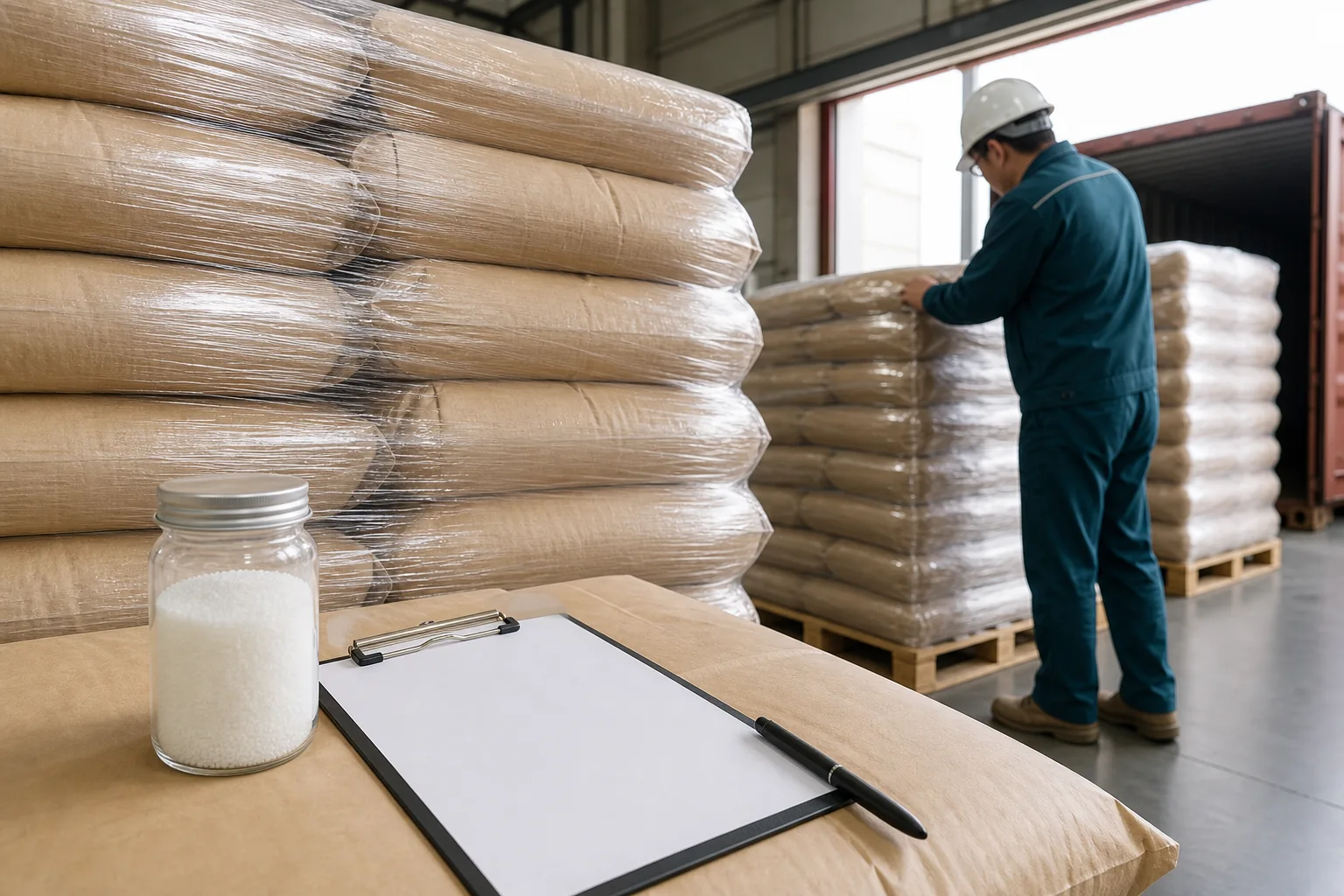
Confirm the bag specification in the offer
A request for polyacrylamide flocculant in 25 kg bags still needs an exact product code and an agreed packaging description. Confirm whether 25 kg is the net content of each supplied bag, how the closure protects the material and which label identifies the grade and batch. Ask for the actual arrangement offered for your quantity.
Packaging terminology can hide practical differences. A paper outer layer, an inner liner and a plastic bag have different handling details, but none proves that the chemical grade is suitable for the plant. Keep package approval separate from the PAM product-family decision and the performance trial.
Count handling units as well as kilograms
Convert the order mass into a bag count and obtain the pallet arrangement if pallets are included. Confirm pallet dimensions, gross weight and unloading requirements before scheduling delivery. A receiving team may be able to handle individual bags but lack access or equipment for an unexpectedly heavy handling unit.
Check the route from unloading to the indoor storage position and then to make-down equipment. Leave space for incoming inspection and held material. Request confirmation of any special labelling or pallet requirement before issuing the purchase order; warehouse preferences are easier to resolve before packing than after arrival.
Match an opened bag to the use rate
Estimate how long operators will use one bag. Powder exposed to moisture can develop lumps and feed unevenly, so storage and resealing practices need to follow the instructions for the actual product. Avoid keeping partly used bags near open water or treating a damaged closure as equivalent to intact packaging.
An illustrative consumption of 5 kilograms per operating day would use a 25 kg bag over five operating days. That calculation is not a recommended dose or a promise of opened-bag life. Use actual plant consumption and grade-specific instructions to decide whether the package format fits intermittent or continuous use.
Keep damage and identity visible at receipt
Inspect labels, closures and external condition against the delivery record. Record damaged or unidentified bags before they enter common stock. If material has become wet or badly caked, seek a product-specific assessment rather than breaking up every lump and assuming the result remains acceptable.
Discuss the intended packaging with the Xinqi Polymer supply team. Broader polyacrylamide production and packing considerations can support the discussion, but the order confirmation should state the package format actually agreed for your grade and destination.
Put packaging into the acceptance record
Retain the approved product identifier, net content, marking requirements and handling arrangement with the order. Record who checks the bags, where discrepancies are held and how the supplier will be contacted. These details make repeat deliveries easier to compare without relying on memory.
Use the packaging and quality guide alongside the trial-order quantity plan. Choose the delivery size after both operational suitability and commercial availability are confirmed. A standard-looking bag is useful only when its contents and handling requirements match the approved purchase.
Review an awkward receiving arrangement
Suppose the buyer requests 25 kg bags but the offer does not identify the pallet arrangement. The warehouse should request the number of bags per handling unit and the relevant gross dimensions before accepting a delivery date. Correct bag weight alone cannot establish whether a forklift, loading bay or storage position can accommodate the shipment.
Where use is intermittent, record how a partly opened bag will be kept identifiable and protected between runs. Ask operators to describe the practical closure method and storage position. If those conditions conflict with product instructions, resolve the handling plan or request another available arrangement before buying extra bags for a discount.
| Review point | Evidence to retain |
|---|---|
| Package | Net content and closure confirmed |
| Handling | Pallet and unloading arrangement agreed |
| Use | Opened-package practice suits product instructions |