
Treat acidity as one part of the requirement
A nonionic polyacrylamide flocculant request should include the acidic stream’s actual pH range, solids and dissolved chemistry. The word acidic cannot define a universal grade. Describe the mineral stream, temperature, previous reagents and the separation stage requiring improvement.
Nonionic PAM is a low-charge candidate in selected duties, but the label does not establish compatibility with every acid, salt or additive. Ask the supplier to review the full conditions. Keep an accepted reference where available so the test can demonstrate a useful difference rather than simply produce visible floc.
Compare nearby grades fairly
Plan a focused set including nonionic and relevant ionic candidates. Use each product’s preparation instructions and keep the comparison basis controlled. Do not change dilution water for one sample merely to make preparation easier without recording the difference and whether it is feasible at the plant.
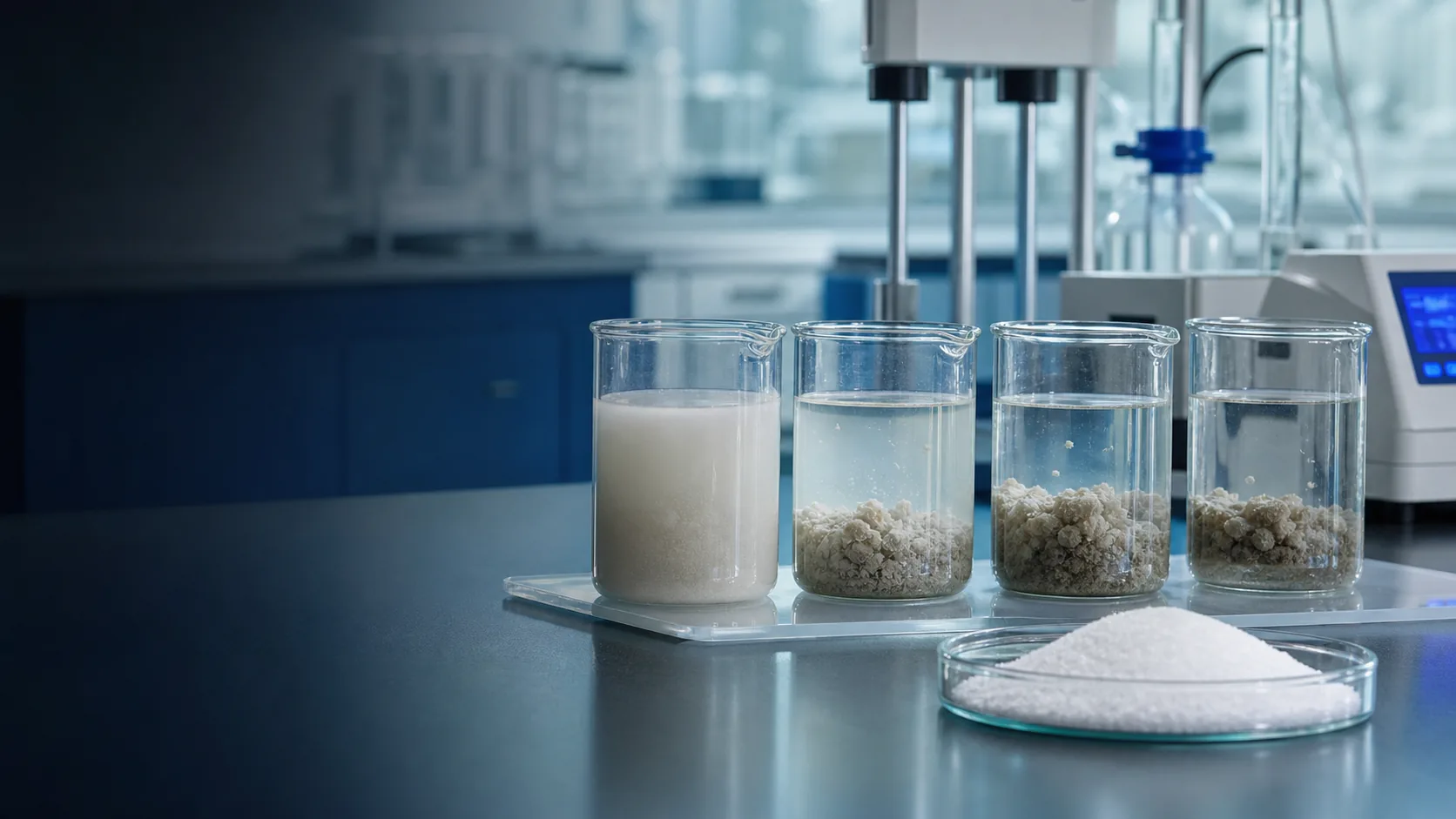
Measure settling, clarity or filtration according to the actual objective. If pH adjustment is part of the process, identify where it occurs and test at that stage. The nonionic product guide explains why the family requires evidence rather than selection as a default neutral option.
Inspect preparation before rejecting chemistry
Appropriate dispersion and hydration are necessary for these polymers. Compare prepared solution with material at injection when a transfer fault is suspected. Incomplete make-down or severe shear can make a suitable candidate appear weak and raise consumption unnecessarily.
Record preparation water, concentration, aging procedure and solution age. Use the preparation guide with instructions for the exact code. Generic limits from a different formulation cannot establish that the proposed sample was prepared correctly.
Provide enough information for a specific proposal
Give Xinqi Polymer the stream analysis, mineral description, current reagents and accepted endpoint. Request a grade and sample plan reflecting the plant. If representative slurry cannot be shipped, explain that limitation and supply a reproducible local test record.
The nonionic polyacrylamide reference adds family context. Keep the proposal provisional until operators confirm both preparation and separation. Neither a catalogue description nor a nominal charge value replaces that acceptance step.
Link the order to the tested range
Record conditions that passed and conditions where the candidate failed. Confirm the commercial code, packaging, handling guidance and documents. A successful test on a mild sample should not be expanded silently to a more concentrated or chemically different stream.
Use the RFQ checklist to connect the validated range with quantity and destination. Include realistic variation in the plant trial and monitor the accepted result after subsequent deliveries. A defensible purchase records acidity, preparation and equipment response together instead of reducing the duty to one label.
Compare the actual acidic stream with the reference
Suppose a nonionic candidate performs well in a prepared mineral suspension but not in the plant stream. Record the differences in dissolved chemistry, temperature, sample handling and preparation water. Repeat the comparison using representative material before drawing a conclusion from the nominal pH alone; equal pH does not establish chemically identical feeds.
Review the nonionic candidate alongside the relevant reference and report where each succeeds or fails. If a process adjustment was necessary, identify whether the plant can maintain it. Purchasing should approve the tested grade and conditions together, keeping any untested extension to another acid or mineral stream provisional until the operating evidence supports it.
| Review point | Evidence to retain |
|---|---|
| Chemistry | pH range and dissolved constituents |
| Preparation | Water and method match the trial |
| Scope | Only the validated stream is approved |