
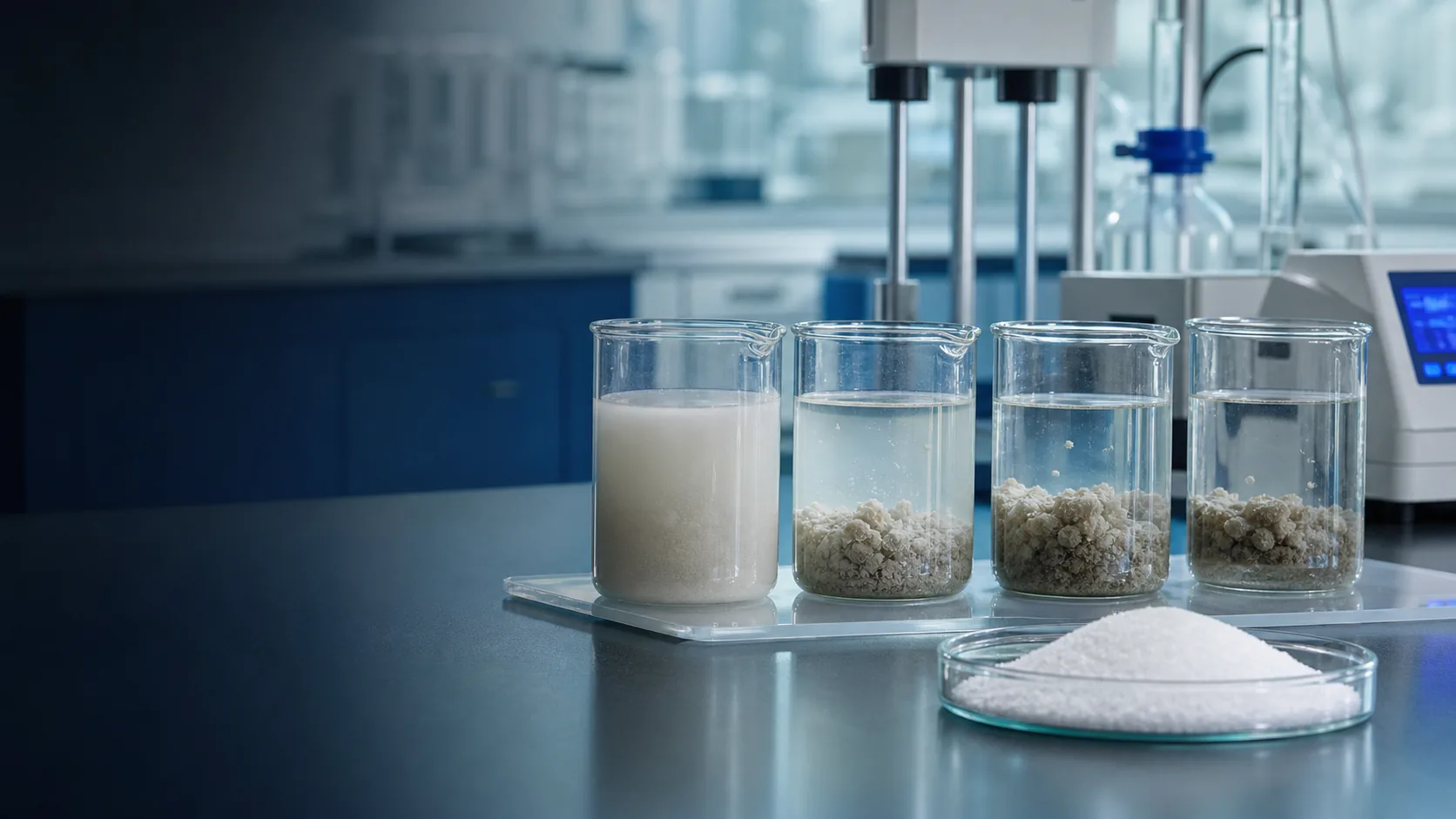
Correct polyacrylamide flocculant solution preparation is essential because dry PAM must uncoil and hydrate before its long polymer chains can bridge particles. Poor wetting, excessive concentration or high shear can make a suitable product appear weak and can increase consumption at the plant.
Choose suitable make-down water
Use clean water within the product’s validated temperature and pH range. Very cold water slows hydration. High hardness, salinity, iron or oxidants can affect solution behavior. When process water is normally used, compare it with clean water during troubleshooting rather than assuming the polymer grade is at fault.
Wet the powder gradually
Create a stable vortex without drawing air deep into the tank. Add powder slowly and evenly across the moving water. Dumping a bag into one point produces gelatinous fisheyes: dry polymer trapped inside a hydrated shell. These particles may block pumps and never contribute fully to flocculation.
Use a practical stock concentration
The correct concentration depends on product and equipment, but dry PAM is normally prepared as a dilute stock rather than a thick gel. Weigh polymer and measure water so concentration is known. Pump setting alone does not prove the make-down ratio. If concentration changes, compare dose as active polymer rather than litres of solution.
Allow complete hydration
Continue gentle mixing for the validated aging time. The solution should become uniform without visible granules. Avoid aggressive impellers, centrifugal pumps or repeated recirculation that can shorten polymer chains. After hydration, use low-shear transfer and provide secondary dilution near the dosing point when better dispersion is needed.
Store only for the validated period
Prepared PAM solutions lose performance with time, contamination and mechanical stress. Label each batch with concentration and preparation time. Keep tanks clean and prevent old solution from accumulating in dead zones. Dry bags should remain sealed and protected from moisture.
Troubleshooting checklist
- Fisheyes: slow the powder feed and improve initial wetting
- Weak floc: confirm concentration, hydration time and shear
- Blocked lines: inspect undissolved powder and solution viscosity
- Variable dose: calibrate water, powder feeder and solution pump
- Sudden degradation: compare make-down water and solution age
After preparation is stable, follow the polyacrylamide dosage guide and the controlled jar-test method. Product-specific preparation guidance should be confirmed with the PAM flocculant supplier. Buyers comparing production and handling capability can also review the polyacrylamide factory reference.
Commission and verify automatic make-down equipment
Automatic systems still require calibration. Catch and weigh the dry feeder output, verify dilution-water flow and compare the measured batch concentration with the controller setting. Inspect the wetting cone, aging chambers and transfer pump for deposits or short-circuiting. A clean display does not prove that polymer is fully hydrated.
Write the operating procedure around product form and actual equipment: fill sequence, mixer speed, powder-feed rate, aging time, maximum storage time and cleaning method. Recheck the procedure when changing supplier, grade or preparation-water source.
Confirm solution quality before changing the PAM grade
Take samples after initial wetting, after aging and at the injection point. Visible granules, inconsistent viscosity or a large performance loss between the aging tank and dosing point indicate a preparation or transfer problem. Check valves, strainers and pumps for locations where hydrated polymer is exposed to unnecessary shear.
When comparing powder and emulsion products, use active content and total operating requirements rather than solution volume. Equipment cleaning, inversion water, storage temperature and shelf life may alter the practical cost. Keep the supplier’s preparation sheet with the plant procedure and retrain operators after changes.
Preparation record to keep with every trial
Record product code and lot, powder mass, water volume, water temperature, mixer setting, feed time, aging time, solution age and transfer equipment. Note any visible fisheyes or deposits. Use the same record for every candidate. Without this control, a difference in wetting or hydration may be mistaken for a difference in charge or molecular weight.