
Name the treatment stage in the enquiry
Textile wastewater can require separate decisions for clarification, flotation and sludge dewatering. State which stage needs polyacrylamide flocculant and describe its incoming stream. A product proposed for conditioning biological sludge should not automatically be used to clarify a salty dyeing effluent.
Give the present chemistry, pH, solids and conductivity where available, and describe dyes, surfactants or other relevant constituents. Explain production and cleaning cycles that change the feed. Treat the industry label as an introduction to the data, not as enough information to prescribe one ionic type.
Separate colour removal from solids capture
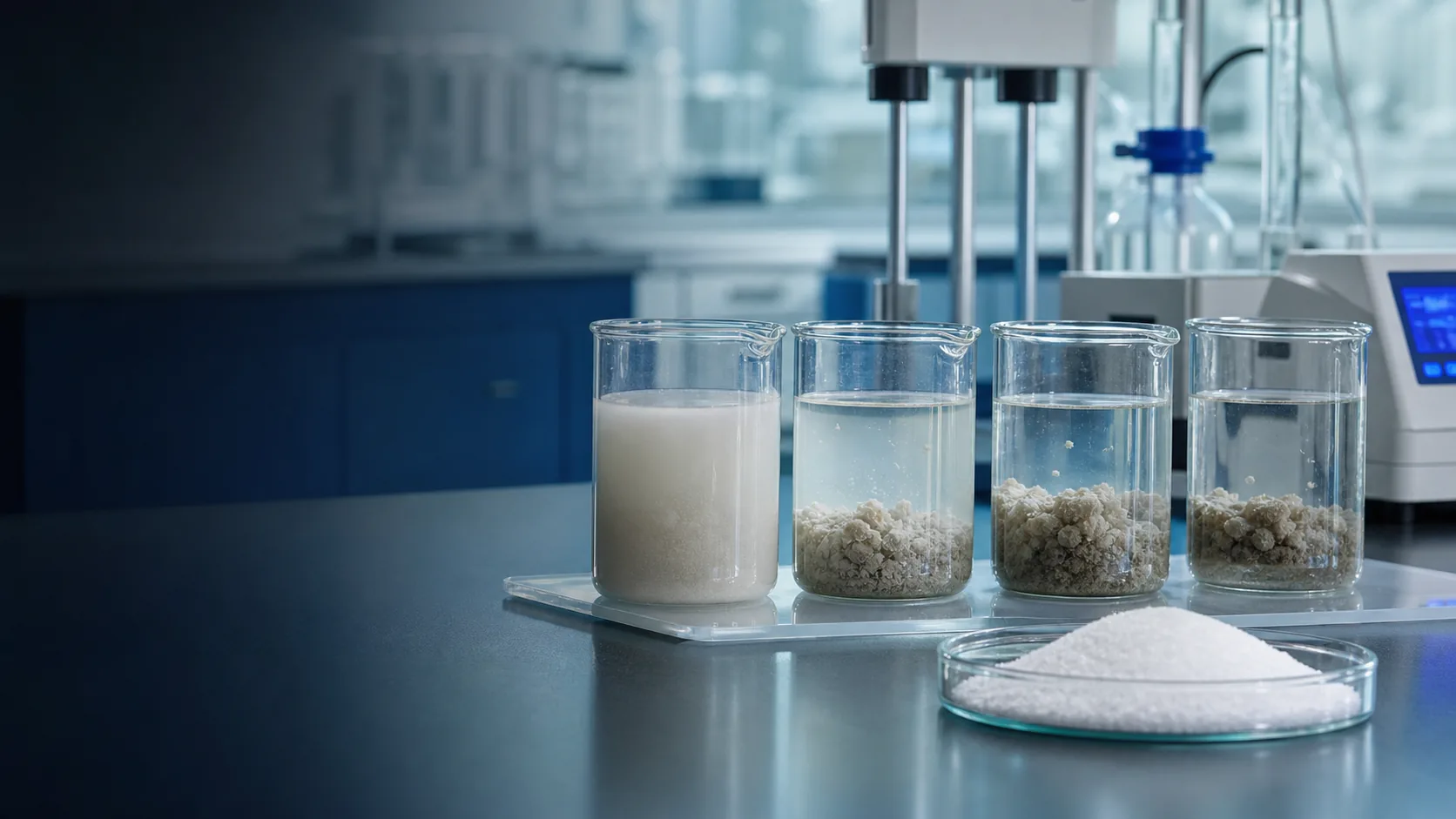
Define what the polymer is expected to accomplish and which measurements establish acceptance. Reduced turbidity does not prove removal of dissolved colour or other dissolved constituents. Record colour or relevant plant analyses separately from solids capture so a visually clear sample is not credited with an unmeasured treatment benefit.
Where coagulant treatment precedes PAM, establish a controlled chemical sequence and evaluate polymer at the relevant stage. Keep pH and coagulant settings documented. The coagulant and flocculant comparison helps identify their different functions before a buyer treats them as substitutes.
Test more than one production condition
Collect representative normal and difficult feed, identifying the production state and sampling time. Compare coded polymer candidates over a dose range with the same preparation and observation method. Avoid diluting away the salinity or surfactant challenge without reporting how the plant would achieve that condition.
Confirm shortlisted products on the separator and include the sludge that follows it. Better water appearance combined with sticky float or poor dewatering can increase total operating difficulty. Record any adjustment needed to maintain the accepted result so suppliers are compared over an achievable operating range.
Request product-specific selection support
Provide those records to Gongyi Xinqi Polymer and ask for a focused sample proposal. The three PAM product families help organise the candidates, while the actual charge and molecular profile need testing. Do not specify a family merely because another textile plant purchased it.
For broader sourcing evidence, the polyacrylamide manufacturer review reference supports questions about sample identity and documentation. Keep the proposed commercial code linked to the results your operating team reviewed.
Place the order against a defined duty
Include the accepted treatment stage, code, measured consumption and quantity in the quotation request. Confirm preparation instructions, packaging, destination and documents before approval. Distinguish a provisional quantity based on laboratory work from demand measured during stable plant operation.
The RFQ guide provides the commercial inputs, while receiving checks preserve traceability. Review the baseline when the production mix or upstream chemicals change. A clear purchasing record prevents one successful batch test from becoming an unsupported guarantee across every dyeing and finishing campaign.
Separate visible improvement from the required analysis
Suppose the test water looks clearer but its required colour measurement has not improved enough. Record that difference rather than approving the candidate from appearance. Review upstream coagulation and the location of the polymer addition, then repeat the measured endpoint under controlled conditions. The chemical proposal should address the actual separation duty.
Keep production and cleaning samples identified so their rankings can be compared honestly. If a candidate works only on one condition, decide whether the plant can manage that limitation before routine supply. The technical acceptance record should state the measurement, sample condition and treatment stage that passed, giving purchasing a precise scope for the order.
| Review point | Evidence to retain |
|---|---|
| Stage | Clarification, flotation or dewatering named |
| Measurement | Colour distinguished from solids removal |
| Variability | Production and cleaning conditions represented |