
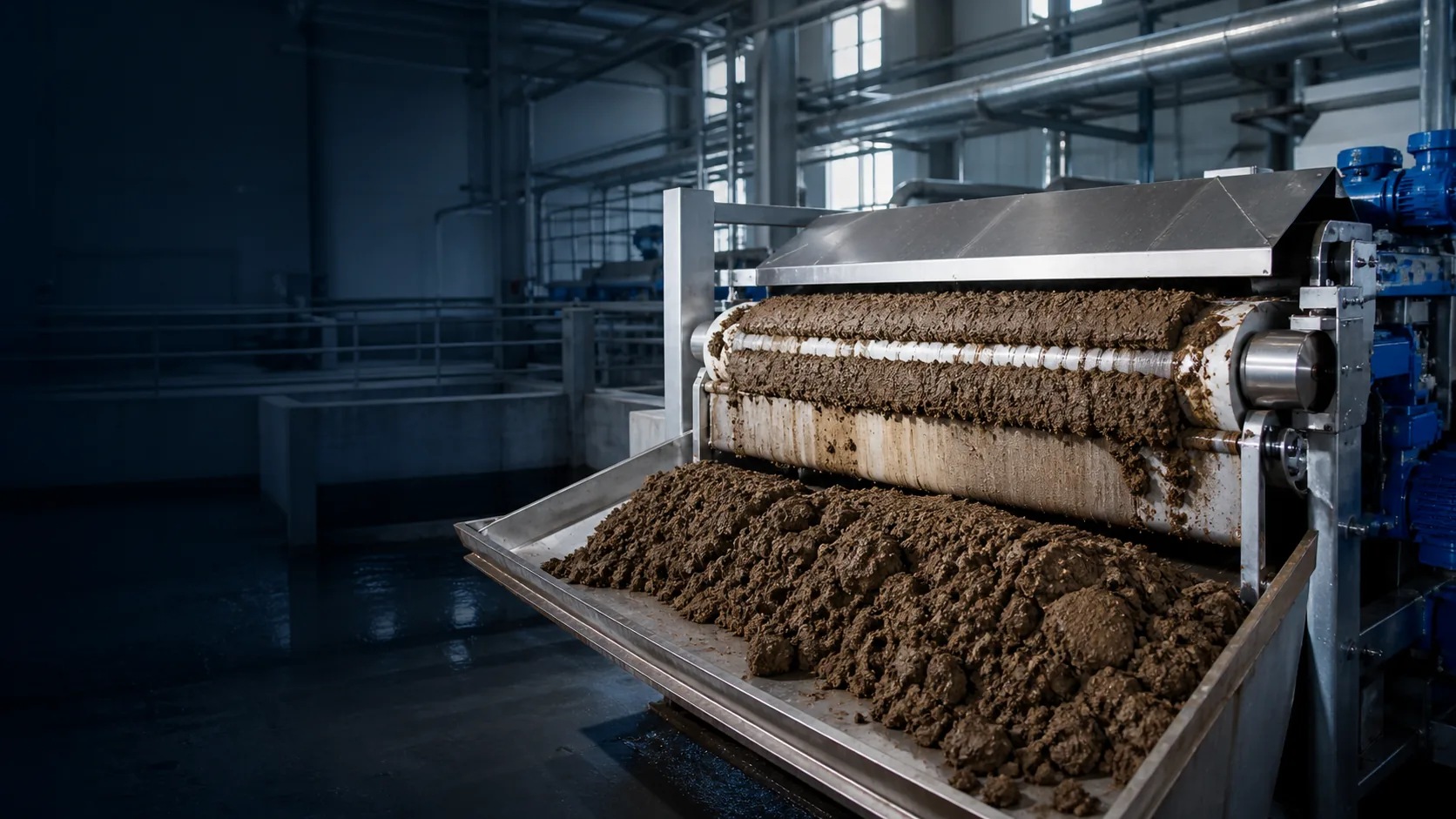
Describe the feed and the actual press
A request for cationic polyacrylamide flocculant for a screw press should identify the equipment and sludge, not only the desired cake dryness. State the sludge source, measured dry solids, feed variability and upstream chemical additions. Explain whether the problem is poor drainage, cloudy filtrate, unstable discharge or limited throughput.
Check whether the product is intended for conditioning before the press or for another treatment stage. A polymer already used for clarification may not be the best conditioner for mechanical dewatering. Begin with the cationic product range and allow representative testing to determine the accepted code.
Evaluate preparation and feed consistency
Document make-down water, stock concentration, hydration procedure and transfer equipment. Calibrate sludge and polymer flow where practical. A concentration change can move the actual dose even if the dosing pump remains at the same setting; a controller percentage is not enough evidence for a supplier comparison.
Inspect feed distribution, drainage surfaces and the relevant press settings with operators. Follow machine instructions when reviewing cleaning or mechanical restrictions. Record maintenance separately from chemical adjustments so an improved discharge is not credited automatically to a new PAM grade.
Trial a practical range rather than one point
Screen coded candidates using the same sludge and a declared dose range. Record gentle-transfer behaviour and water release. Initial tests can narrow the set, but the screw press must establish whether the candidate maintains drainage and solids transport over a stable run.
Collect filtrate and cake observations at defined intervals. Record feed solids, throughput, supplied-product consumption and any setting changes. Large floc combined with deposits or unstable discharge may create a poor operating window. Identify the result at lower and higher dose before deciding.
Send a trial record that supports the quotation
Send baseline and candidate codes, preparation details and measured endpoints to Xinqi Polymer technical sales. The offer should refer to the material evaluated on your machine. Ask for clarification if the commercial code differs from the sample identifier.
The cationic polymer reference provides family context. Keep purchasing quantity separate from dose estimates until consumption is reliable. Include trial hours and the actual operating schedule when deciding how much material to request for the next stage.
Retain approval details for repeat supply
Record the accepted grade, form, operating range and receiving documents. Confirm packaging and storage instructions for that product. Avoid approving a substitute solely from a similar charge label; preparation behaviour or machine response may change the practical cost.
Use the PAM procurement checklist to collect destination and forecast demand. Recheck the baseline after a major feed or equipment change. Reproducible discharge and capture provide a stronger repeat-order basis than an isolated cake photograph or a promise of higher molecular weight.
Review an unstable discharge before ordering more
Suppose the trial initially produces acceptable filtrate but the discharge becomes intermittent as feed changes. Record when the problem begins, check sludge concentration and review the press settings with the operating team. Compare the reference at similar conditions. This separates a candidate’s narrow range from a loading or mechanical limitation.
Before approving the purchase, repeat the stronger candidates over the feed range the plant actually expects. State whether throughput or cake handling required a significant adjustment. The quotation should identify the candidate meeting the accepted combined result, with enough preparation and operating detail for the plant to reproduce it after receiving commercial material.
| Review point | Evidence to retain |
|---|---|
| Feed | Normal and difficult sludge represented |
| Discharge | Stability measured over the trial |
| Approval | Filtrate, capacity and handling all acceptable |