
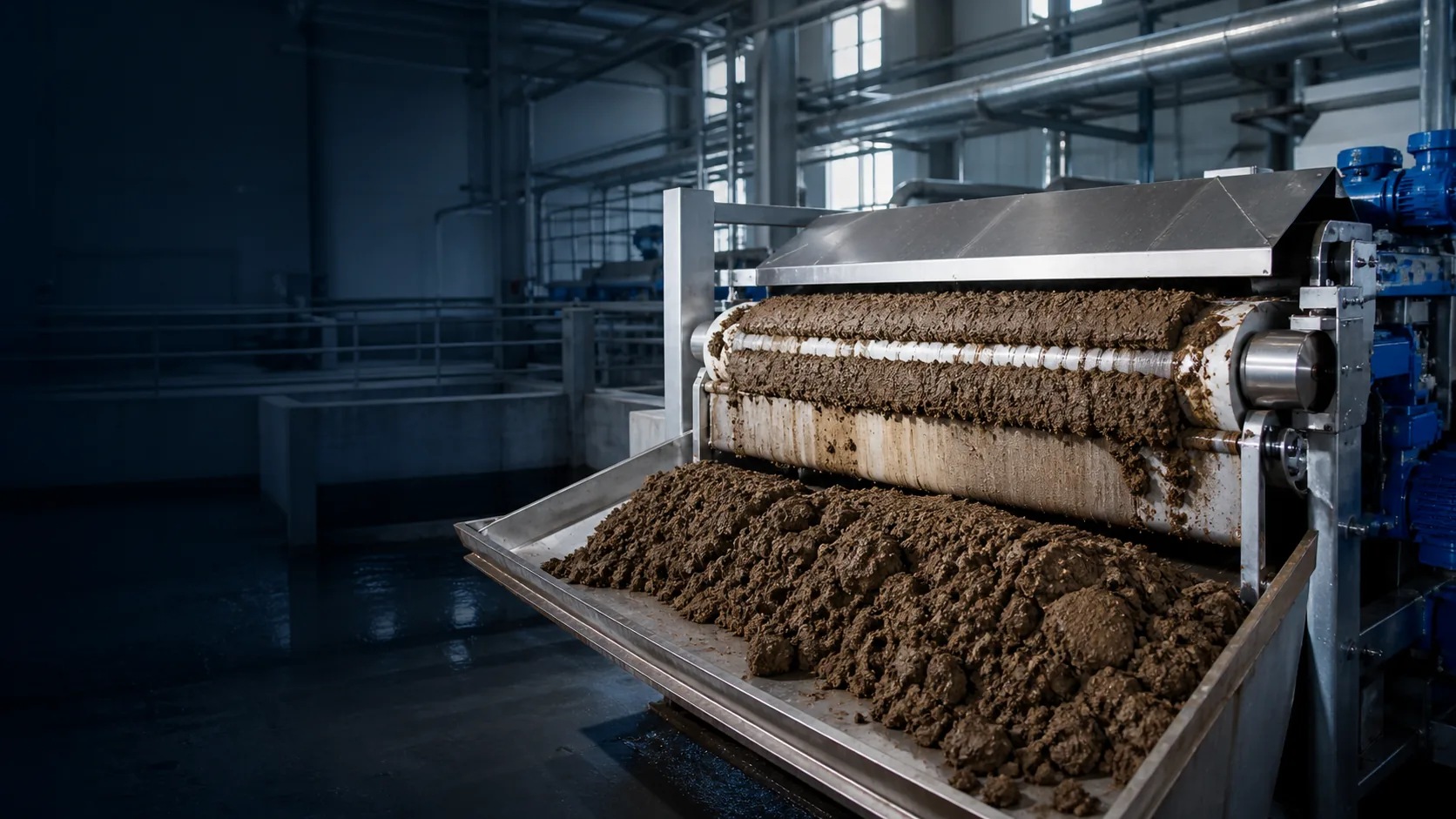
Define what the belt press must improve
A belt-press purchase should distinguish poor gravity drainage from weak solids capture or difficult cake release. These symptoms can lead to different candidate requirements. Describe the sludge source, dry-solids range, existing polymer and the point at which conditioned sludge reaches the belt.
Cationic polyacrylamide flocculant is commonly screened for organic sludge, but a requested high-charge grade is only a hypothesis until testing supports it. Explain whether the feed contains primary sludge, biological sludge or an unstable mixture. Residual upstream chemicals and changes in the sludge blend belong in the enquiry.
Check the belt and feed before blaming the grade
Inspect belt condition, washing, distribution of feed and the operating settings used during the comparison. A blinded belt or uneven loading can reduce drainage even when flocculation is adequate. Record these limitations so a supplier does not recommend a chemical change to address an unreported machine problem.
Review stock concentration and the time allowed for hydration. Prepared solution that contains undispersed material can distort the trial and increase consumption. Follow the PAM preparation procedure and calibrate the feed equipment before judging small performance differences.
Use drainage and filtrate as screening evidence
For the initial laboratory comparison, observe water release and filtrate quality under a controlled method. Keep sample quantity, mixing sequence and observation time consistent. Eliminate candidates that require an impractical preparation condition or work only at an extremely narrow dose, then take the stronger options to the actual machine.
At the belt press, record cake release, solids capture and throughput as well as drainage. Large floc alone does not demonstrate a clean belt or economical operation. Track what happens below and above the accepted dose so operators can recognise the working range when feed conditions change.
Translate performance into a purchase requirement
Send a coded trial record to Gongyi Xinqi Polymer with the sludge description and the operating result. Ask for the proposed commercial code, product-specific make-down instructions and relevant documentation. A sample approval should remain linked to the material described on the quotation.
The cationic PAM selection reference can support discussion of charge and supplied form. For the local product route, review cationic polyacrylamide flocculant. Treat nominal specification values as part of the review, not as a guarantee of drainage on every sludge.
Compare the full operating result before ordering
Calculate consumption over representative operating hours and include preparation effort and rejected solids where they materially affect the decision. A less expensive kilogram may not be a less expensive tonne of sludge processed. Confirm that the accepted candidate can be stored, fed and prepared using the intended plant arrangement.
Put the grade, package format, forecast quantity and destination into the order enquiry. Establish a receiving check that preserves product and batch identity. Repeat a short benchmark when feed or belt conditions change rather than assuming a historical laboratory ranking remains the best choice for every delivery.
Review fast drainage followed by belt fouling
Suppose a candidate drains rapidly in a bench test but the belt requires more attention during the plant trial. Record the dose, feed, belt condition and observed deposits. Check preparation and washing before concluding that the candidate is unsuitable, but include any continuing cleaning burden in the purchasing comparison once those conditions are controlled.
Ask operators to identify the practical result over a representative run: clear filtrate, reliable drainage, manageable cake release and stable throughput. A laboratory ranking can support that result but cannot override it. Keep the accepted working range and the warning signs outside it available to the people who will adjust dosing after routine delivery.
| Review point | Evidence to retain |
|---|---|
| Drainage | Water release under controlled conditions |
| Belt | Washing and cake release documented |
| Consumption | Usable range rather than one laboratory point |