
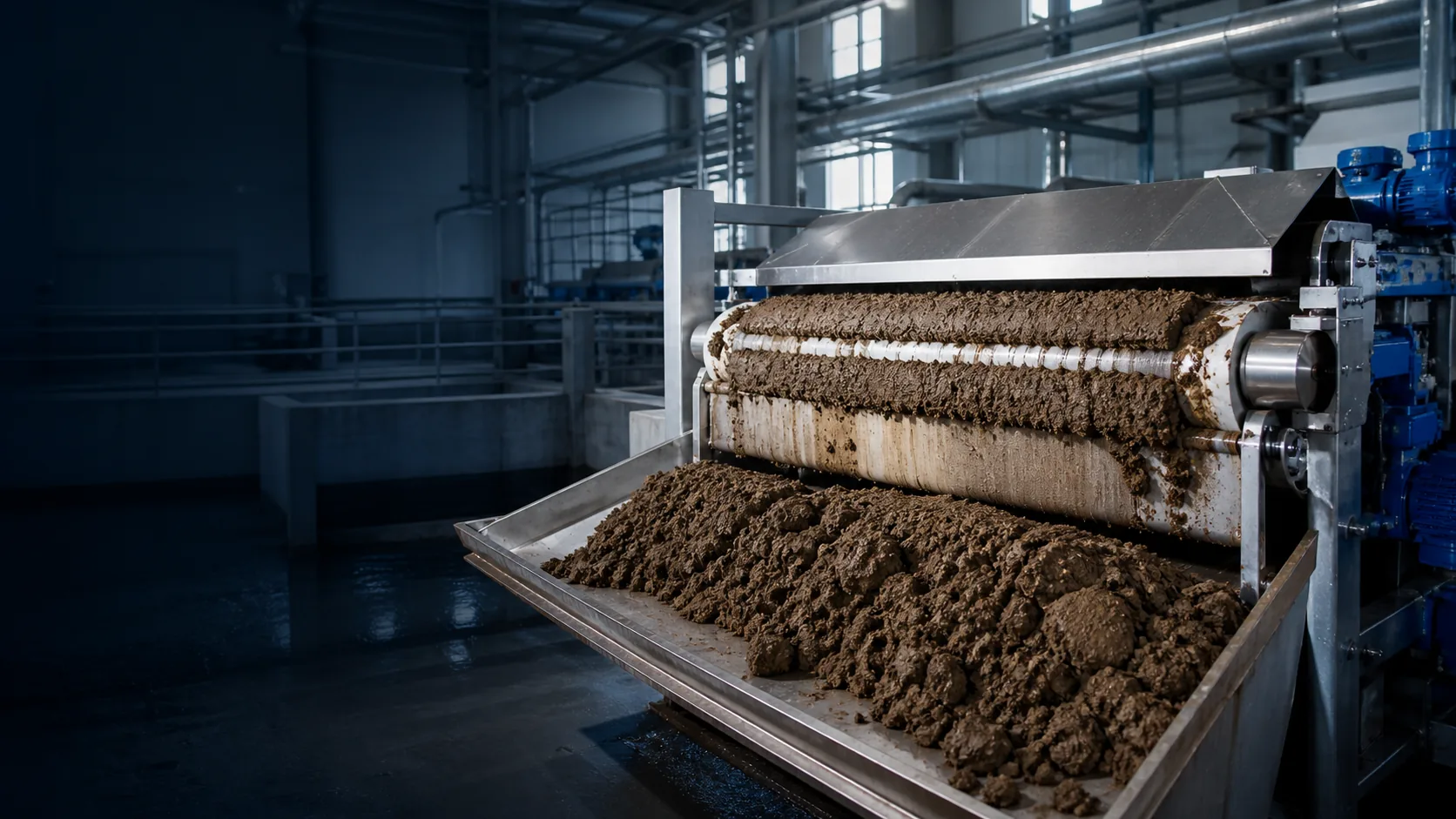
Choosing a polyacrylamide flocculant for sludge dewatering starts with the sludge and the machine, not with a universal cationic grade. Municipal biological sludge, food-processing sludge, paper sludge and oily industrial sludge contain different solids, extracellular polymers, salts and residual coagulants. These differences change the charge demand, floc strength and useful dosage window.
Why cationic polyacrylamide is the usual starting point
Most organic sludge particles carry a negative surface charge. A cationic polyacrylamide flocculant can reduce electrostatic repulsion and bridge fine particles into flocs that release water. Charge density controls adsorption, while molecular weight contributes chain length and bridging. The highest charge or viscosity is not automatically best: excessive charge can create sticky solids, hazy centrate or a narrow operating window.
The cationic polyacrylamide product guide explains the main selection variables. A specialist polyacrylamide manufacturer should ask for sludge and equipment data before proposing samples.
Match floc strength to the dewatering equipment
A centrifuge exposes conditioned sludge to high shear and short residence time, so floc must form rapidly and remain compact. A belt filter press needs free drainage in the gravity zone and floc that survives compression. A screw press favors stable conditioning over a longer residence time, while a chamber filter press may prioritize permeability and cake release. A polymer that performs well on one machine can fail on another.
Compare performance with operating metrics
- Active polymer dose per tonne of dry solids
- Solids capture and centrate or filtrate clarity
- Cake dry solids and release from the equipment
- Throughput, torque, pressure and belt speed
- Prepared-solution concentration and aging time
Do not select from cake appearance alone. A slightly drier cake may not justify a much higher dose, and clear filtrate can accompany poor throughput. Compare total treatment cost, including polymer, hauling, energy and lost solids.
Prepare a representative trial
Collect fresh sludge during normal operation and record dry solids, pH, temperature, present chemicals and current polymer dose. Screen several cationic grades across a dose curve, then confirm the strongest candidates on the real machine. The controlled polyacrylamide test method helps standardize preparation and comparison.
For more cationic product context, review the dedicated cationic polyacrylamide reference. Send the sludge source, dewatering equipment, present dose, monthly requirement and destination with the RFQ so samples and pricing are compared on a practical basis.
Information that improves a supplier recommendation
Report whether the feed is primary, secondary, digested or mixed sludge and state any ferric, lime or coagulant addition upstream. Include normal and peak dry-solids concentration rather than one laboratory value. For existing plants, a recent operating record with polymer flow, sludge flow, cake solids and centrate TSS is more useful than a product name alone.
During a plant trial, change one variable at a time and allow the machine to reach stable conditions before collecting results. Keep a retained sample from each candidate lot and document solution age. This creates a defensible comparison for operations and purchasing teams.
Diagnose changes before increasing polymer
A sudden loss of cake dryness may result from lower feed solids, biological changes, a different sludge blend, worn equipment or incorrect stock concentration. Inspect centrate or filtrate together with cake and machine loading. If capture is good but cake remains wet, the limitation may be mechanical rather than chemical. If fines escape, review charge, mixing and dose first.
For purchasing, compare candidates over several shifts and calculate polymer cost per tonne of dry solids. Specify the equipment and tested operating range in the trial record. This prevents a lower bag price from replacing a product that provides better capture, throughput and disposal savings.
Final RFQ checklist
State sludge origin, dry solids, daily flow, dewatering machine, present polymer, active dose, cake solids, centrate quality and monthly consumption. Add the destination port and packaging preference. If a sample is requested, explain how it will be prepared and which plant metrics will determine approval. This information allows the proposed grade, sample quantity and quotation to match the real operating decision.