
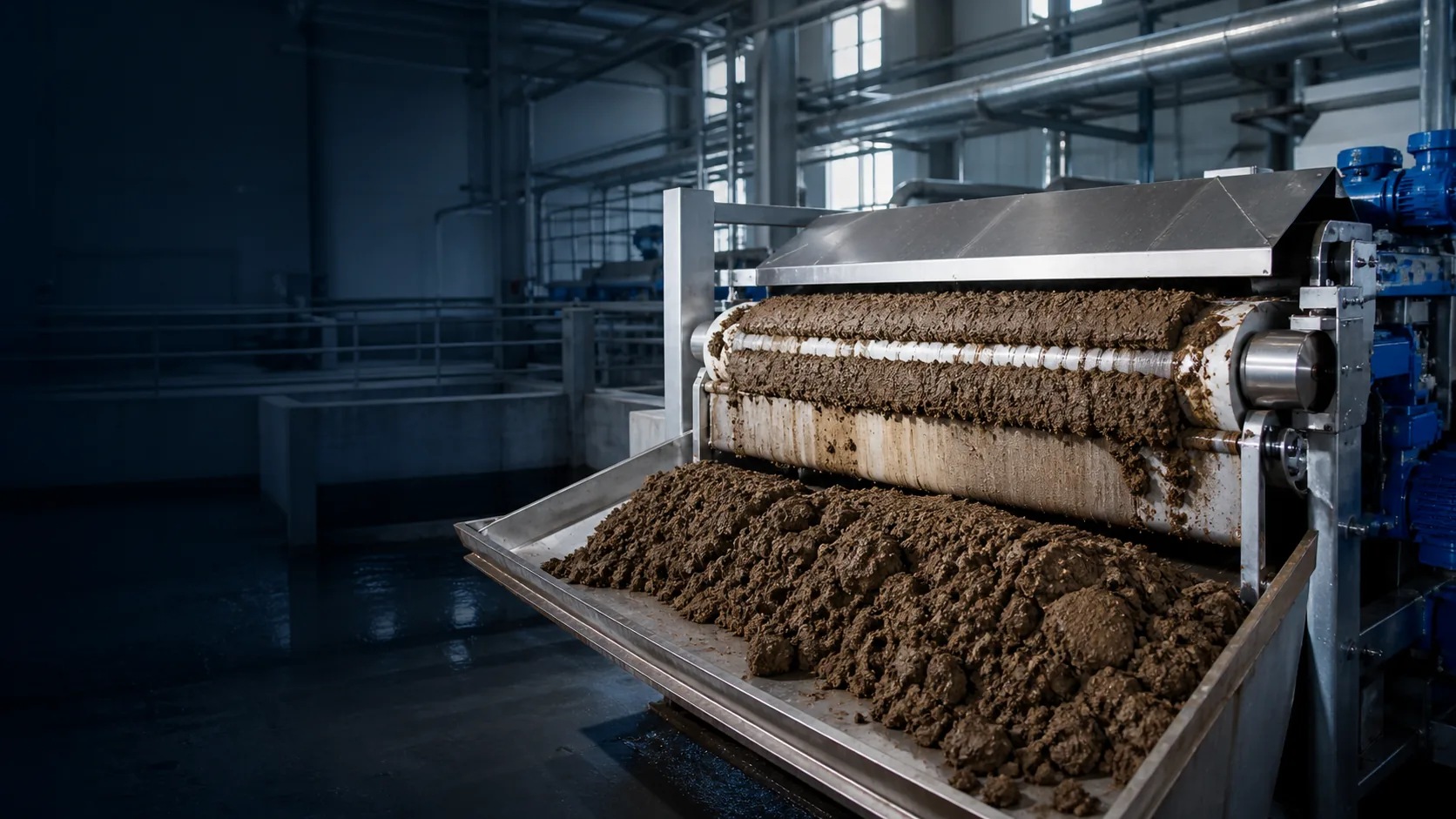
Make the centrifuge duty explicit
Buying cationic polyacrylamide flocculant for a centrifuge requires a machine-specific trial brief. Identify the sludge source, digestion status if relevant, normal solids range and the current conditioning programme. Record the limitation that matters: solids escaping in centrate, low throughput, difficult cake handling or inconsistent consumption.
The cationic PAM product family is a useful starting point for many organic sludges, but it does not identify one universally suitable charge or molecular profile. Describe upstream ferric, lime or other additions because a changed sludge blend can alter the useful screening range.
Record the loading and injection conditions
Provide wet sludge flow, measured dry solids and relevant operating settings during the trial. Identify where polymer meets the sludge, whether secondary dilution is used and how prepared solution is transferred. The supplier needs to know the contact and shear conditions rather than receiving only a requested cake-solids figure.
Keep equipment variables stable while comparing candidate grades wherever practical. A change of feed rate or machine setting can improve cake or capture independently of chemistry. If adjustments are necessary, record them and repeat the reference run so purchasing can distinguish a better polymer from a different operating condition.
Agree the acceptance endpoints together
Evaluate solids capture, centrate quality, cake handling and throughput over a stable operating period. A drier grab sample is not automatically a better total result if more solids escape or the plant loses processing capacity. Collect paired observations and state how the samples represent the run.
Report consumption with explicit units and an identified product basis. Include the dry-solids dose calculation in the record when sludge concentration varies. Compare supplier candidates against the accepted operating endpoint, not only against the visible size of floc before the centrifuge.
Ask for a focused candidate set
Request a small selection of coded grades with their preparation instructions and supporting technical data. Explain which reference product currently works and where it falls short. Candidate differences should be purposeful enough for the operating team to interpret, rather than an unlabelled collection of powders.
The Xinqi cationic polymer team can discuss those inputs with the intended application. The dedicated cationic polyacrylamide reference gives additional family context. Neither a catalogue charge value nor an external reference replaces a trial on the installed centrifuge.
Carry the successful trial into the order
Identify the accepted code, supplied form, sample or lot identity and the preparation procedure that achieved the result. Include expected consumption, packaging, destination and required documents in the quotation request. Any proposed change of form or code should return to technical review before purchasing treats it as the same material.
Use the commercial RFQ checklist to close delivery details. Retain the full operating record as the receiving baseline, particularly where sludge blends change through the year. A supply decision supported by repeatable capture and throughput is more useful than selecting the cheapest candidate from a single favourable shift.
Review a drier cake with poorer capture
Suppose a new candidate gives a drier cake grab sample but more solids appear in centrate. Ask whether the apparent gain remains useful once capture and throughput are included. Repeat paired measurements at stable settings, and check the feed solids during both runs before deciding that the product reduces sludge-handling cost.
The operating team should state which endpoints are mandatory and which can be traded within the approved process range. Purchasing can then compare the successful consumption only among candidates that meet those endpoints. Retain the settings with the approval record so a later delivery is not judged against a machine condition that was never tested.
| Review point | Evidence to retain |
|---|---|
| Feed | Sludge identity and dry-solids loading |
| Machine | Stable settings and injection route |
| Acceptance | Capture, cake and throughput reviewed together |