
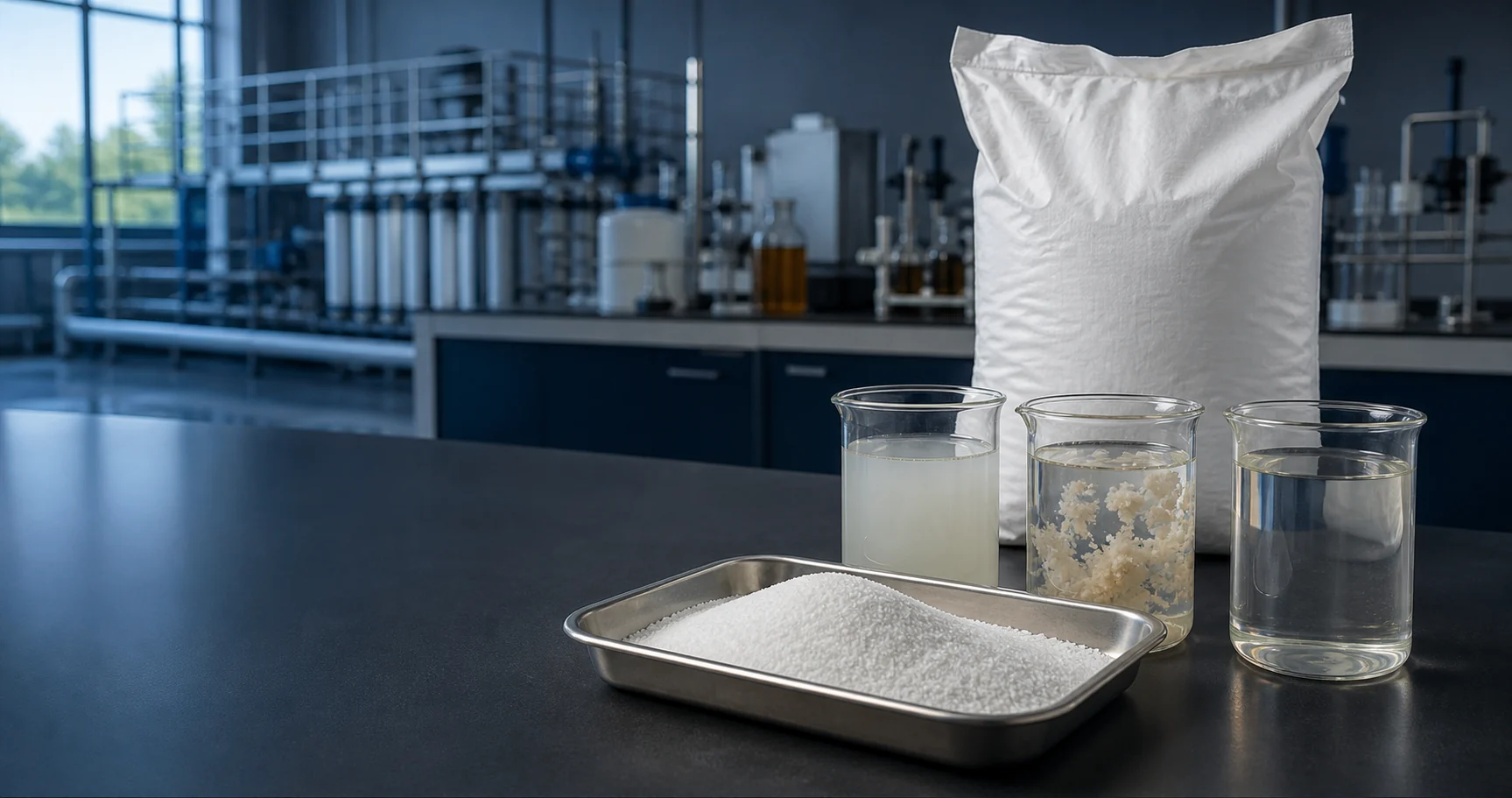
A polyacrylamide flocculant for DAF wastewater treatment must form floc that captures suspended solids, fats and oil while remaining light and strong enough to attach to microbubbles. Product selection cannot be separated from coagulant chemistry, pH, mixing and the hydraulic condition of the dissolved air flotation unit.
Start with wastewater character
Food processing, slaughterhouse, dairy, paper, refinery and metal-finishing streams have different oil, protein, fibre and mineral content. Cationic PAM is often evaluated for organic wastewater, while anionic grades can work after charge neutralization by PAC, alum or ferric salts. The right ionic type must be confirmed with the actual water.
Control the coagulant and polymer sequence
The primary coagulant normally needs fast mixing and time to destabilize colloids before dilute PAM is added. If both chemicals meet at the same turbulent point, polymer can be consumed inefficiently or floc can be damaged. Test the addition order, delay and mixing energy. The article on PAC versus polyacrylamide explains why the two chemicals perform different jobs.
Judge the flotation result
- Effluent turbidity, TSS, COD and oil removal
- Float blanket thickness and solids concentration
- Floc attachment to bubbles and resistance to shear
- Polymer and coagulant dose per cubic metre
- White-water pressure, recycle ratio and nozzle condition
A weak blanket is not always a polymer problem. Poor air saturation, blocked release nozzles, variable equalization or incorrect pH can produce similar symptoms. Confirm mechanical conditions before increasing dose.
Avoid common dosing failures
Overdose can create sticky float, hazy effluent and rapid fouling. Underdose leaves pin floc that escapes with the treated water. Prepare a dose curve using representative wastewater and include current coagulant dose. Fully hydrate dry PAM and dilute it enough to distribute across the flow without excessive local concentration.
Move from bench test to DAF trial
Jar tests can identify charge and dose ranges, but bubble-floc attachment must be confirmed on the DAF. Trial two or three candidates while holding coagulant, recycle pressure and flow as stable as possible. Record results over several feed cycles, not one favorable grab sample.
Use the polyacrylamide sample comparison procedure for initial screening. A polyacrylamide flocculant manufacturer should receive the wastewater source, pH, present chemicals, DAF flow and target effluent data. Organic-sludge applications can also be compared with the cationic PAM reference.
Build an operating window, not a one-day setting
DAF feed can change sharply with production cleaning, product loss and equalization-tank level. Test low, normal and high organic-load samples when possible. Establish adjustment rules for coagulant and polymer separately so operators do not increase both chemicals after every upset.
For supplier evaluation, provide representative influent and effluent analyses, the coagulant name, target pH, recycle ratio and available mixing time. A useful product recommendation should state which variables were assumed and which must be confirmed during the plant trial.
Troubleshoot the symptom systematically
Pin floc in the effluent suggests insufficient destabilization, weak bridging or excessive shear. A watery float blanket can indicate low solids loading, poor bubble production or underdosing. Sticky float and rapid scraper fouling can indicate polymer or coagulant overdose. Check pH, white-water pressure, nozzle condition and chemical concentration before changing the product.
Compare supplier samples across normal production and cleaning cycles. Calculate total PAC and PAM cost per cubic metre and record float disposal characteristics. The selected programme should maintain compliance and stable sludge handling, not only produce a clear grab sample.
Final RFQ checklist
Provide the industry and production cycle, influent pH, TSS, COD, oil or fat, present PAC or ferric dose, polymer dose, DAF flow, recycle pressure and discharge target. Describe the float blanket and any recurring upset. With these details, cationic and anionic candidates can be screened in a focused sequence instead of changing coagulant and polymer blindly.